Discover the inspiring story of the visionary who transformed a simple idea into a global movement of service, fellowship, and goodwill that continues to impact communities worldwide.
Paul Harris at age 3, around the time he moved to his grandparents' home.
Rotary started with the vision of one man — Paul P. Harris.
Harris was born on 19 April 1868 in Racine, Wisconsin, USA. At age 3, he moved to Wallingford, Vermont, where he grew up in the care of his paternal grandparents. He attended the University of Vermont and Princeton University and received his law degree from the University of Iowa in 1891.
In 1896, Harris settled in Chicago and opened a law practice. Four years later, he met fellow attorney Bob Frank for dinner on Chicago's North Side. They walked around the area, stopping at shops along the way. Harris was impressed that Frank was friendly with many of the shopkeepers. He had not seen this kind of camaraderie among businessmen since moving to Chicago and wondered if there was a way to channel it, because it reminded him of growing up in Wallingford.
"The thought persisted that I was experiencing only what had happened to hundreds, perhaps thousands, of others in the great city. ... I was sure that there must be many other young men who had come from farms and small villages to establish themselves in Chicago. ... Why not bring them together? If others were longing for fellowship as I was, something would come of it."
Harris eventually persuaded several business associates to discuss the idea of forming an organization for local professionals. On 23 February 1905, Harris, Gustavus Loehr, Silvester Schiele, and Hiram Shorey gathered at Loehr's office in downtown Chicago for what would become known as the first Rotary club meeting.
In February 1907, Harris was elected the third president of the Rotary Club of Chicago. Toward the end of his presidency, he worked to expand Rotary beyond the city. Some club members resisted, not wanting to take on the additional financial burden. But Harris persisted, and by 1910, Rotary had expanded to several other major U.S. cities.
Harris recognized the need to form a national association with an executive board of directors. In August 1910, Rotarians held their first national convention in Chicago, where the 16 existing clubs unified as the National Association of Rotary Clubs (now Rotary International). The new association unanimously elected Harris as its president.
At the end of his second term as Rotary president, Harris resigned, citing ill health and the demands of his professional practice and personal life. He was elected president emeritus by convention action, a title he held until his death.
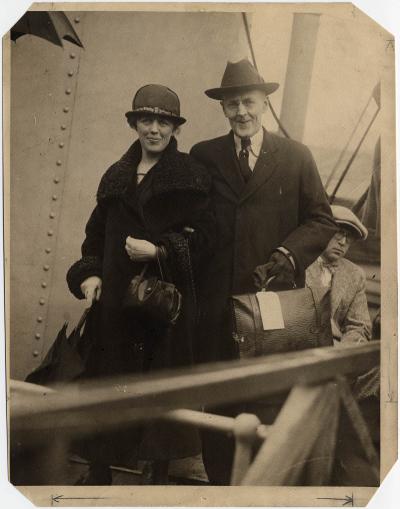
Jean and Paul Harris board a ship after visiting Rotary members in Bermuda, 1925.
Before he died, Rotary founder Paul Harris requested that memorial donations, in lieu of flowers, be made to The Rotary Foundation to support education. But in his youth, Harris was a mischievous child and an itinerant student.
Harris was born in 1868 in Racine, Wisconsin. Three years later, as the family struggled financially, Paul and his older brother, Cecil, were sent to live with their paternal grandparents in Wallingford, Vermont, in 1871, where Harris attended primary school in a single-room schoolhouse that today serves as the meeting place of the Rotary Club of Wallingford. He was prone to playing pranks and hooky, later attending secondary school in Rutland, Vermont. He was expelled from Black River Academy in Ludlow after only a few weeks.
After attending the Vermont Military Academy, Harris enrolled at the University of Vermont in Burlington in 1885. He tried out for the freshman football team and earned a spot on it. In December 1886, he and three others were expelled for their conduct as members of an underground society. He later wrote that although he was innocent of the particular act that he was accused of, the expulsion was nonetheless justified.
"I ably assisted in the organization of an underground society 'for the subjugation of unruly freshmen.' The operations of this clandestine organization gave new color to life at the University. President Buckham became conscious of the change and banished four of the organization's most faithful workers from college. I was one of the four."
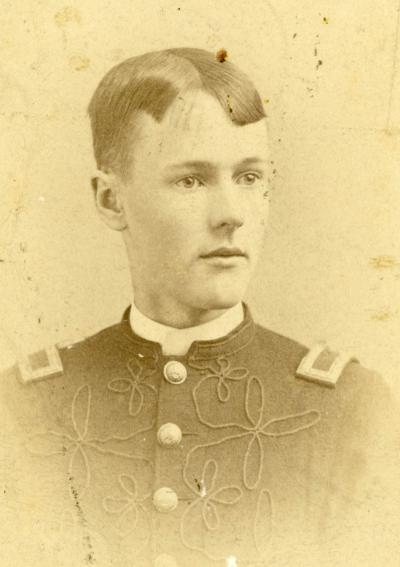
Paul Harris as a cadet in the Vermont Military Academy.
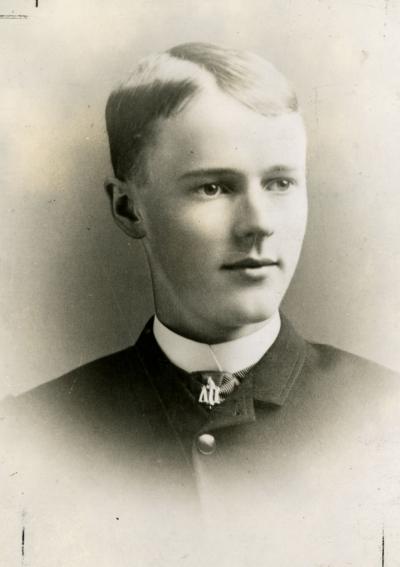
Paul Harris as a student at the University of Vermont in Burlington.
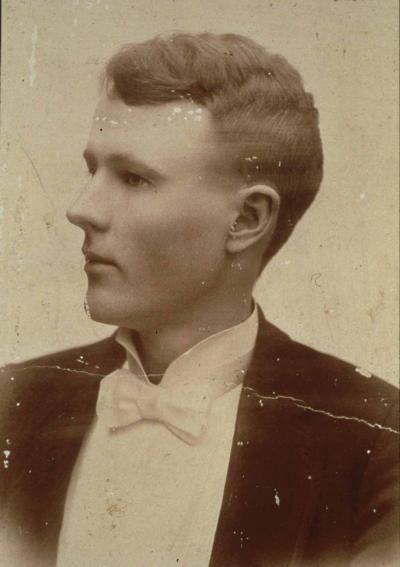
Paul Harris, shortly after he graduated from the University of Iowa law school in 1891.
The school Paul Harris attended as a child in Wallingford, Vermont, circa 1933-38.
Harris spent the following spring with a private tutor hired by his grandfather, and later in 1887, he began his studies anew at Princeton University. His time at school was cut short, however, by the death of his grandfather in March 1888. Though Harris completed the semester, he did not return for the next academic year.
Instead, Harris spent a year working for the Sheldon Marble Company in West Rutland, Vermont. After the year, he made good on his promise to his grandmother that he would work hard, make something of himself, and honor his grandfather's memory.
He spent the next year working at a law firm in Des Moines, Iowa. After this apprenticeship, he enrolled at the University of Iowa and graduated with a Bachelor of Laws in June 1891. He later received several honorary degrees, including a Bachelor of Arts and a Doctor of Laws from the University of Vermont.
In the mid-1920s, Harris became actively involved in Rotary again, serving as the public face of the organization. To promote membership and service, he attended conventions and visited clubs throughout the world, often accompanied by his wife, Jean.
Harris died on 27 January 1947 in Chicago at age 78, after a prolonged illness. Before his death, he made it known that he preferred contributions to The Rotary Foundation in lieu of flowers. By coincidence, days before he died, Rotary leaders had committed to a major fundraising effort for the Foundation.
Upon news of his death, Rotary created the Paul Harris Memorial Fund as a way to solicit these donations. Rotarians were encouraged to commemorate the late founder of Rotary by contributing to the fund, which would be used for purposes dear to Harris' heart. In the 18 months following his death, The Rotary Foundation received $1.3 million, which helped support the Foundation's first program — scholarships for graduate study abroad.
Freshman football players at the University of Vermont, including a young Paul Harris, circa 1885. The '89 signifies that the players were to be in the graduating class of 1889.
Join our community of leaders and change-makers in Dharamshala.
Become a Member